
When an interviewer says "tell me about a time you had to adapt to change," open with what you did differently, not with the change itself. Name the change in a few words, say what you changed on your own side, admit what was hard, and end on how it turned out. Aim for about a minute.
Most answers to this question do the opposite. They spend forty seconds on the reorganization, the new software or the new boss, and the speaker barely appears. This post shows why that happens, builds a one-minute answer you can say out loud, and ends with a five-minute exercise you can do today.
What the interviewer is really listening for
This is a standard question, and employers ask it in several forms. Miami University's hiring guide for managers lists "Tell me about a time you adapted to a change within an organization" and, a few items later, "Tell me about a time you did not adapt very well to change," both under the heading of adaptability (Miami University, behavior-based interviewing). The University of Massachusetts lists a close cousin: "Can you think of a time when you weren't comfortable with a change in your organization? What did you do?" (UMass, behavioral interview questions).
Look at the last part of that second question. "What did you do?" is the whole test. Nobody is hiring you for the change. They already know that jobs change. They want to know what happens to your work on the day it does.
LinkedIn's guide for hiring managers tells them to listen for "acceptance that change is inevitable" and for people who can adapt and find the support they need (LinkedIn Talent Solutions). Put simply, the interviewer is listening for three things:
- You changed something. A habit, a method, your schedule. Something on your side is different after the change than it was before.
- You did not wait. You moved before anyone had to push you.
- You are honest about it. You can say what was hard without complaining.
Liking the change is not on the list. You can be unhappy about a change and still handle it well.
Why change stories leave you out
Here is how a weak answer tends to sound: "So our company was going through this big reorganization, and leadership decided to move support from phone to chat, and there were new tools and new managers, and it was a pretty hard time for everybody, but I'm a really flexible person, so I just rolled with it."
That is a true story about a company. It is not a story about you. The only sentence with "I" in it is a claim, and "rolled with it" tells the listener nothing they can picture.
This happens because the change is the easy part to remember. What you did about it felt small by comparison. But the small thing is the answer. The interviewer can only judge what you did, so that is what has to fill the minute.
The fix is to flip the order. What you did goes first, and the change becomes a few words of setup.
How to answer tell me about a time you had to adapt to change, in four parts
Here is one example, built around a change many teams have been through: moving customer support from phone calls to chat.
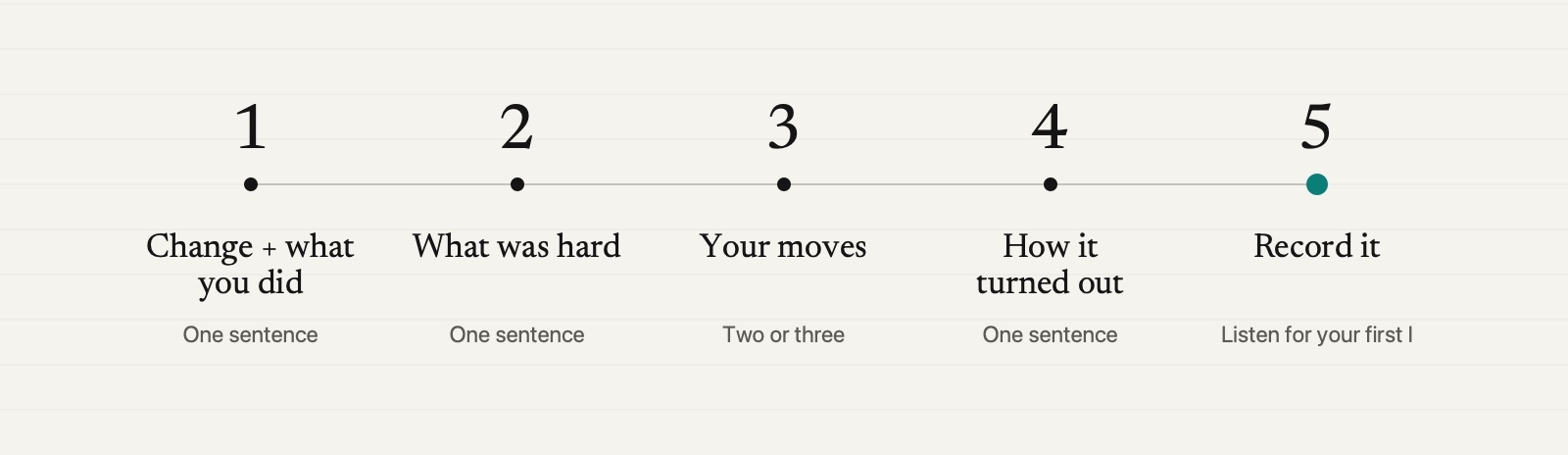
Part one, the change and what you did about it, in one sentence. "When our company moved support from phone to chat with six weeks' notice, I rewrote the answers I gave most often as short messages before the switch happened." The change takes half the sentence. The other half is you. If the interviewer remembers one thing, it should be this.
Part two, what was hard, in one sentence. "I had spent four years on the phone, and I was not happy about it at first, because calming people down with my voice was what I was good at." This sentence earns trust. It tells the listener the change cost you something.
Part three, what you did differently, in two or three moves. "I pulled my thirty most common calls and wrote each answer in three lines or fewer. I spent two afternoons beside a colleague who had worked on the chat pilot and copied how she asked for details. And I moved my long cases to the morning, when the queue was quiet." Each move is something the interviewer can picture.
Part four, how it turned out, in one sentence. "By the second month my customers rarely needed a second chat, and my manager added my short answers to the team's shared library." End there. Something other people kept using is proof enough, and you do not need a big number.
That is about a minute out loud. If you want more on timing, our post on how long an interview answer should be covers it.
Find the one thing you changed
If you cannot say what you did differently in one sentence, you have not found your answer yet. Most big changes contain dozens of small ones, and you only need one.
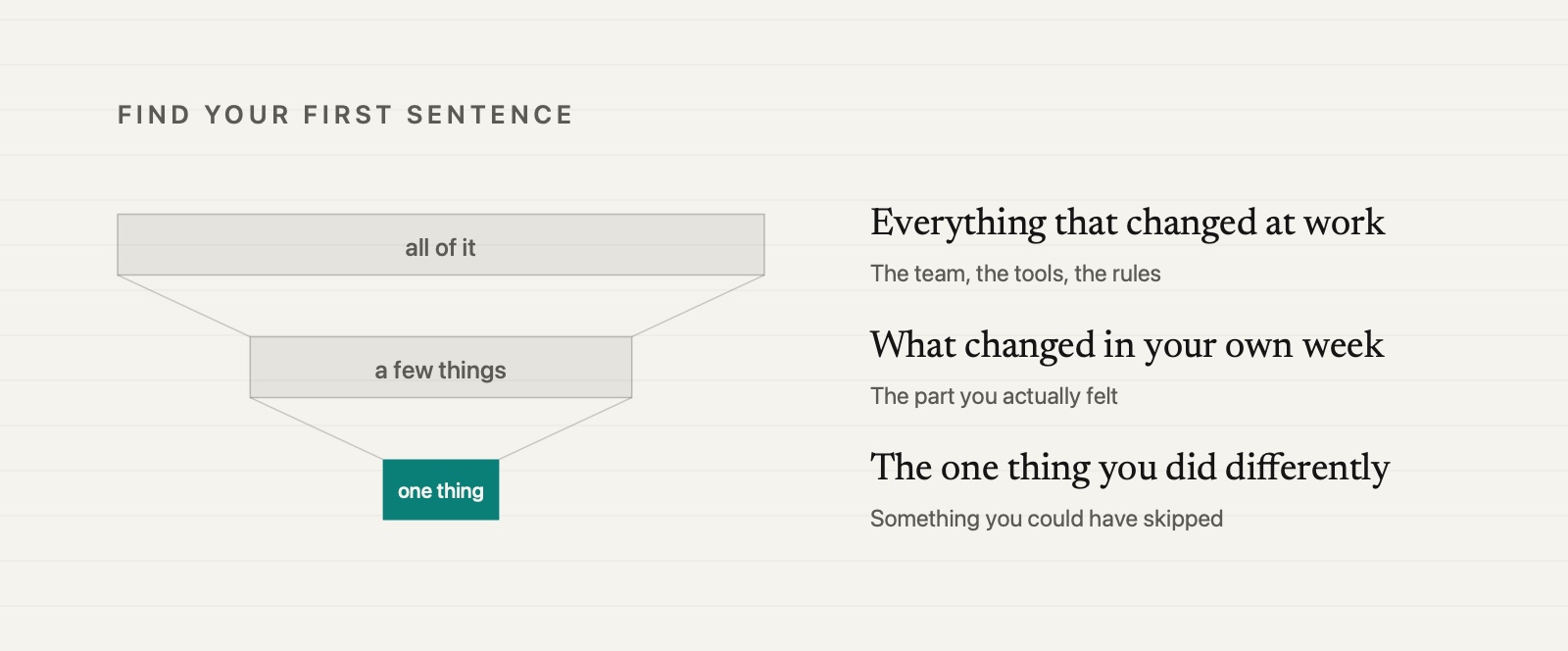
Start with everything that changed around you: the team, the tools, the rules. Then ask what changed for you, in your actual week. Then ask the question that matters most: what did you do differently because of it, that you could have skipped?
That last part keeps you honest. If everyone on the team was required to take the same training, then taking it is not your answer. Doing what everyone had to do shows you followed instructions. Writing your own cheat sheet after the training, because the training skipped the part you needed, shows that you adapted.
Pick a story with a real before and after
The best story has a clear before, a clear after, and a change you did not choose. A new system, a merger, a new manager, a shift in priorities, a move to remote work, or a role that grew after someone left all count. It does not have to be huge.
Avoid three kinds of story:
- The change you resisted until it went away. That is a story about waiting.
- The change you hated and left over. It tends to sound bitter, and it ends with you gone.
- The change you asked for. If you chose it, you did not have to adapt to it. A story about starting something on your own fits better under tell me about a time you took initiative.
And if your story is mostly about picking up a new skill against a clock, it is a closer match for tell me about a time you had to learn something quickly. That question asks how you learn. This one asks how you respond when the ground moves.
Say the hard part, then stop for a beat
Part two is the sentence people either skip or get stuck in. Skip it and you sound rehearsed, because nobody believes a big change was simple. Stay in it too long and the answer turns into a complaint.
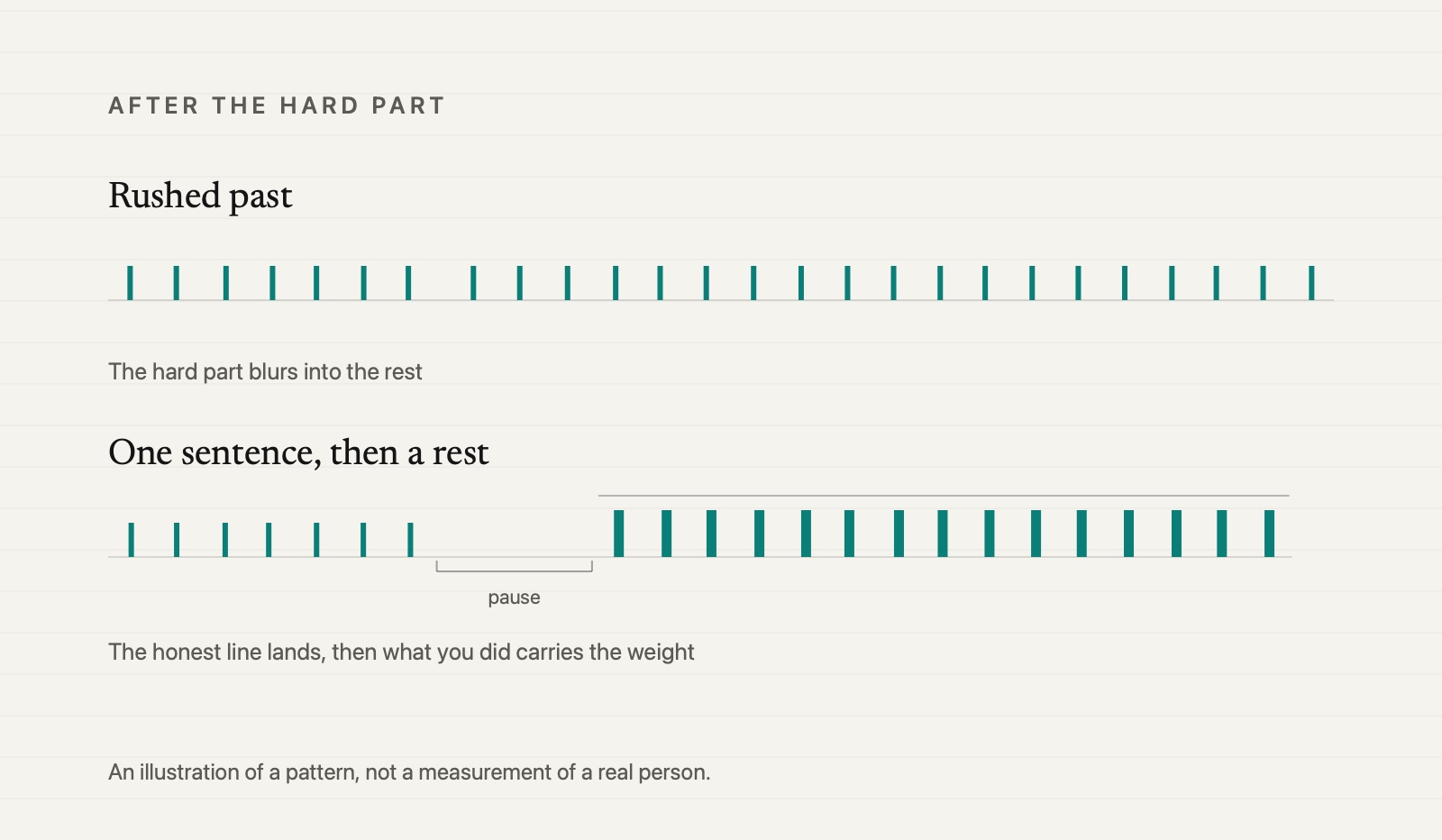
The way through is one sentence, and then a short pause. Say the hard part plainly, without "kind of" or "I guess." Then stop for a beat before you say what you did. That small rest does a real job. It lets the honest sentence land, and it tells the listener that the story is about to turn.
A second of quiet will feel longer to you than it does to anyone listening.
When the interviewer asks for more
Follow-ups are common with this question. The four-part shape handles each one.
"What would you do differently?" Pick one real thing. "I would have asked to shadow the chat team sooner instead of waiting for the second week." A small, honest change is more believable than "nothing."
"Tell me about a time you did not adapt well." Answer it directly, because it is a fair question and Miami's guide lists it. Name the change, say what you got wrong, and say what you do now because of it. "I kept using my old spreadsheet for a month after the new system came in, and my numbers went out of step with the team's. Now I move over in the first week, even if it is slower at the start."
Try it now: a five-minute practice
You need your phone's voice recorder and a timer.
- Write one sentence that names the change in a few words and says what you did about it. Count the words. If more than half are about the change, rewrite it.
- Write one sentence on what was hard. Cross out "kind of" and "I guess."
- Write your two or three moves, one short sentence each.
- Write one sentence on how it turned out.
- Start the timer and the recorder. Ask yourself out loud, "Tell me about a time you had to adapt to change." Answer from your notes.
- Play it back and listen for one thing: how many seconds pass before you first say "I." If it is more than five or six, your answer still opens on the company. Move your first sentence up and record again.
On the second take, listen for the pause after the hard part.
If your first sentence is clear on paper but the story of the reorganization takes over the moment someone asks, that is a speaking habit, and you can only catch it by talking. Sayforth is an iPhone app, coming soon, built for that: a 30-day program with one question a day, answered out loud, then shown after you finish as a single speaking line so you can see where your main point landed, with one change to try tomorrow.
Be first to know when Sayforth is live.
Get launch updatesFrequently Asked Questions
How do you answer "tell me about a time you had to adapt to change"?
Start with one sentence that names the change and says what you did about it. Add one sentence on what was hard, then two or three things you did differently, and end on how it turned out. About a minute is enough.
What is a good example of adapting to change at work?
Any time something changed that you did not choose and you did something different because of it. Rewriting your most common answers before a move from phone to chat, or reshaping your week around a new manager's priorities, are both good examples.
Is it okay to say I did not like the change?
Yes, in one sentence. Saying a change was hard makes the rest of your answer easier to believe. Keep it about your own work, not about the people who made the decision, and move straight on to what you did.
What if I have never been through a big change at work?
Use a smaller one, or a story from a class, a part-time job, or a volunteer role. A new schedule system or a new team leader is enough. The interviewer cares about what you did differently, not how big the change was.