
Here is how to answer "tell me about a time you had to give difficult feedback." Open with what changed because of the conversation. Then say the hard sentence you actually said, close to your real words. Spend the middle on how you said it and what you did when the other person responded. End with what was different afterward. Aim for about a minute.
Most people know a time they had to give difficult feedback. The trouble starts when they tell it out loud. The story fills up with background, the hard sentence gets softened until it means nothing, and the interviewer never hears what was actually said. This post builds one example answer part by part, shows where it usually goes soft, and ends with a five-minute exercise.
What the interviewer is really asking
Behavioral questions exist for one reason. The career center at the University of North Carolina explains that employers ask them to see how you handled past situations, because that suggests how you will handle similar ones (UNC Career Services). So this question is not about feedback in general. It asks how you will give difficult feedback the next time someone on your team needs to hear something they will not like.
The interviewer is listening for three things. Did you say the hard thing, or did you hint at it? Did you say it with respect? And did anything change because you said it?
That last part matters most. An answer where you delivered the message perfectly and nothing changed is only half a story. An answer where you were a little awkward but the problem got fixed is a whole one.
Why the answer goes soft when you say it out loud
Giving hard feedback is uncomfortable for almost everyone, including experienced managers. A training guide from University of Florida Human Resources opens with something leaders say when asked why they did not have those talks earlier in their careers: they did not know what to say or when to say it, so they "either avoided it or did it very badly" (UF Human Resources).
That same discomfort comes back in the interview, years later. It shows up in three ways:
- The long runway. Two minutes on the project, the team and the deadline before the feedback appears.
- The vague middle. "I let them know there were some concerns." The interviewer cannot tell what you actually said.
- The missing ending. The story stops at "and I told them," as if saying it was the goal.
Each one hides the same thing: the sentence you said. That sentence is the proof you can do the job, and it is the part most people rush past.
How to answer tell me about a time you had to give difficult feedback in four parts
The order matters more than the wording. Here is one example answer, built part by part. The details are an illustration, not a real person's story.
1. What changed, in one sentence. Start where the story ends. "I once had to tell a teammate that the client reports they sent each week had errors the client was starting to notice, and within a month the reports were clean again."
2. The sentence you said. Quote yourself, as close to your real words as you can. "I said, 'The last three reports had numbers that did not match the dashboard, and the client asked about it on Tuesday.' Then I asked what was going on."
3. How you handled the response. This is the longest part. "They were embarrassed at first and said the dashboard was wrong. I pulled up one report next to the dashboard and we looked at it together. It turned out they were copying from an export that had stopped updating. I did not know that until I asked."
4. What was different after. "We switched them to the live export and added a two-minute check before each report went out. The next reports went out with no corrections, and the client stopped asking. I also learned to raise problems after the first report, not the third."
That is about a minute out loud. If you want more on timing, our post on how long an interview answer should be covers it.
Pick one behavior, not a list
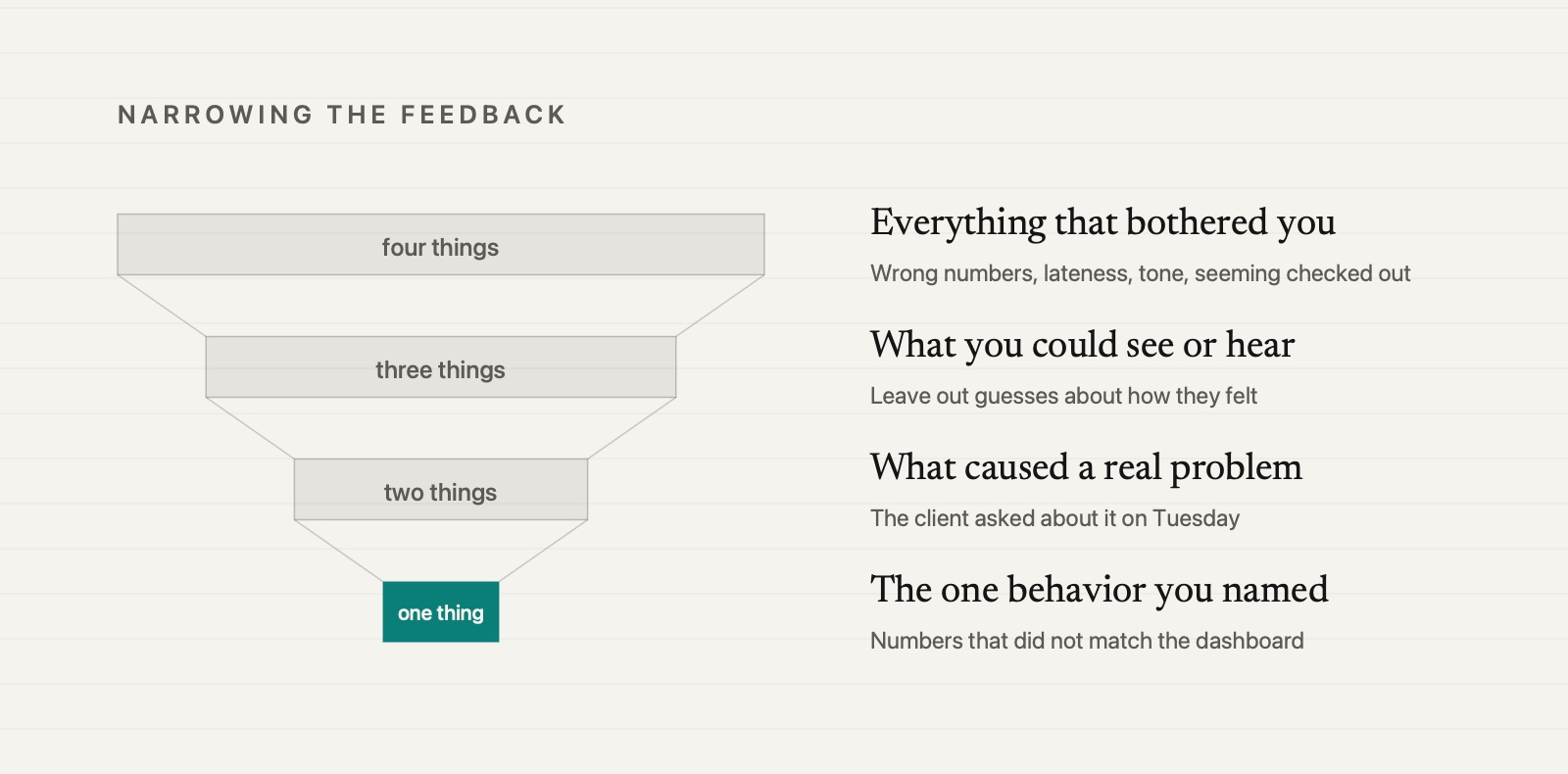
The hardest choice comes before you speak. Most real feedback stories involve a pile of frustrations. The reports were wrong, they were late, the tone of the emails was off, and the person seemed checked out. If you bring all of that into the answer, it stops sounding like feedback and starts sounding like a complaint.
The same University of Florida guide offers a simple model for preparing the actual conversation, called Situation, Behavior, Impact. It asks three questions: what situation you want to discuss, what behaviors you have observed, and what the impact will be if the behavior does not change (UF Human Resources). Those questions work just as well for choosing what goes in your interview answer.
Narrow it down the same way. Start with everything that bothered you. Keep only what you could see or hear. From that, keep what caused a real problem. Then pick the one behavior you actually named. In the example, that is the numbers that did not match the dashboard. The late reports and the tone can stay out.
Say the hard sentence, then stop
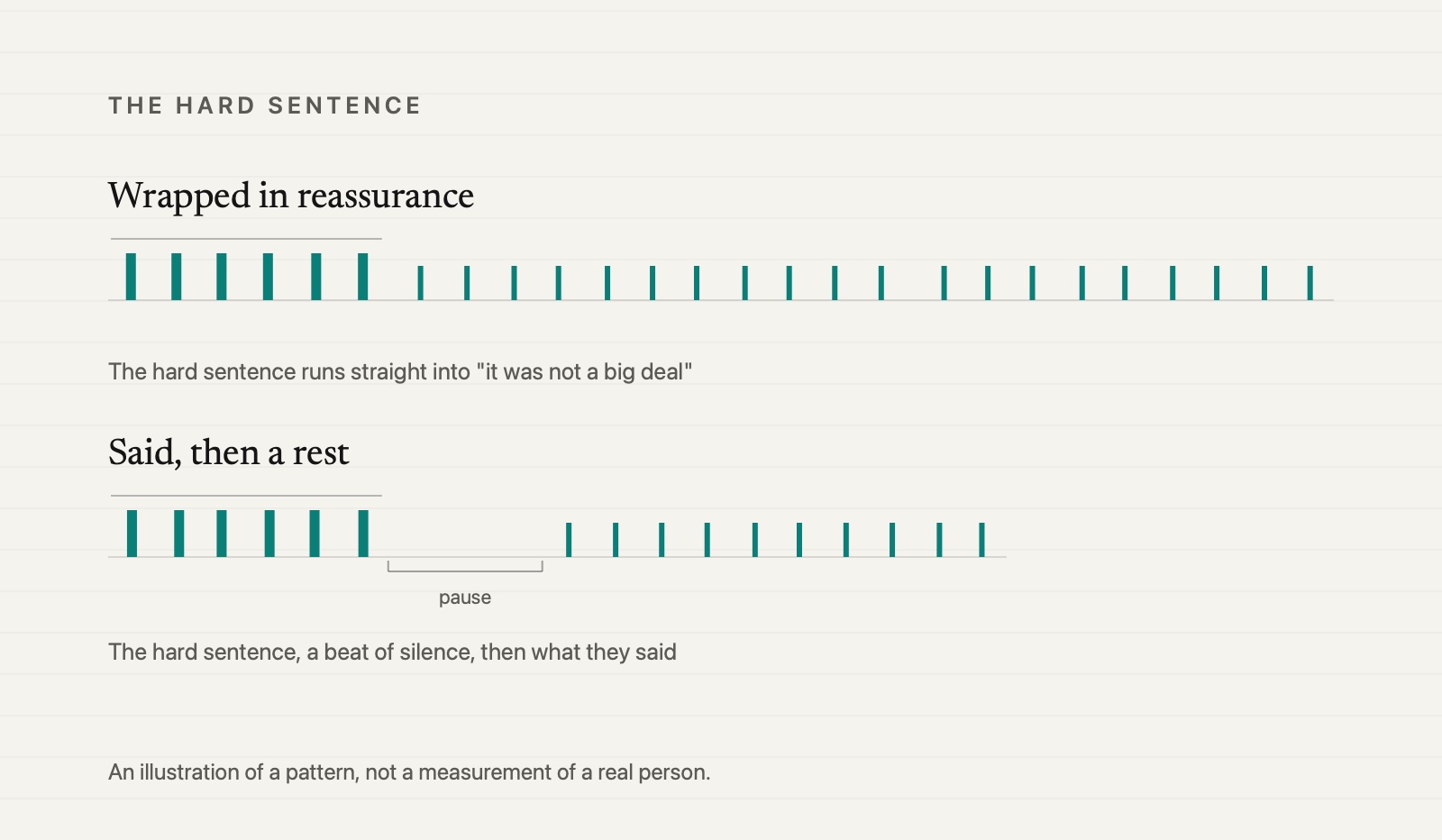
Notice what the example answer does after the hard sentence. It stops. "Then I asked what was going on." That pause is part of the story, because it shows you gave the other person room to answer instead of piling on.
It also matters in how you tell it. When people get to the hard sentence in an interview, they often speed up and pile reassurance on top of it. "And I said the numbers were off, but I mean, it was not a big deal, they were great otherwise, I just thought." By the end, the interviewer has heard a hedge, not feedback.
Try it the other way. Say the sentence plainly, at the same pace as the rest. Let a short pause follow it, the way the pause followed it in the real conversation. Then move on to what the other person said. The pause tells the listener "this is the part that mattered" without you having to say so.
Leave the other person their dignity
Interviewers listen to how you describe the person who got the feedback. If they sound lazy, careless or difficult, you sound like someone who is hard to work for. Describe them the way you would if they were in the room.
The University of Florida guide makes the same point about the conversation itself. Its examples swap labels like "your work is sloppy" for what the manager actually saw, such as open work orders and paperwork that was never followed up on (UF Human Resources). Do the same in your answer. Name the behavior, not the person.
A few things to leave out:
- The character judgment. "They just did not care." Say what they did instead.
- The hero ending. If they fixed it, give them the credit for fixing it. You get credit for raising it well.
- The other person's private details. If the cause was a health issue or a family problem, say "something outside work was going on" and move on.
If your story is mostly about a long conflict with someone hard to work with, it may fit better as an answer to tell me about a time you worked with a difficult coworker. And if you want the reverse of this question, our post on received critical feedback covers being on the other side of the table.
When the interviewer asks for more
Good interviewers follow up. Have a one-sentence answer ready for the common ones.
"How did they react?" Be honest. If they pushed back at first, say so, then say what you did. "They disagreed at first, so I showed them one report next to the dashboard." That answer is stronger than "they took it really well."
"What would you do differently?" Pick one real thing. Raising it sooner is the most common honest answer, and it is a good one.
"Have you ever given feedback to someone senior to you?" If you have, give the one sentence you said and what happened. If you have not, say how you would do it: privately, about one specific thing, with what you saw and why it mattered. Our post on tell me about a time you disagreed with your manager covers raising a concern upward in more detail.
Try it now: a five-minute practice
You need your voice, a timer and your phone's voice recorder.
- Pick the story (one minute). Think of a time you had to give difficult feedback, meaning you told someone something they did not want to hear about their work. A peer, a classmate or a volunteer counts.
- Write two sentences (one minute). The first says what changed. The second is the hard sentence you actually said, in quotes.
- Say the whole answer out loud and record it (one minute). Start with the first sentence. Do not read the rest.
- Listen back (one minute). Find the hard sentence. Did you say it plainly, or did you wrap it in "kind of" and "I just"? Did you pause after it?
- Say it again (one minute). Same story. This time, say the hard sentence at your normal pace and let a beat of silence follow it.
Most people find the second take is shorter and the hard sentence finally sounds like something a person said out loud.
If the hard sentence sounds clear on paper but still comes out soft the moment you say it, that is a habit you can only hear by speaking. Sayforth is a 30-day iPhone program built for that: one question a day, answered out loud, then shown after you finish as a single speaking line so you can see where your point landed and where you paused, with one change to try tomorrow. It is coming soon, and you can see how the daily practice works now.
Be first to know when Sayforth is live.
Get launch updatesFrequently Asked Questions
How do you answer "tell me about a time you had to give difficult feedback"?
Start with what changed because of the conversation. Then quote the hard sentence you said, describe how you handled the other person's response, and end with what was different afterward. Keep it to about a minute.
What if I have never managed anyone?
You do not need a title to give difficult feedback. Feedback to a peer, a classmate on a group project, a volunteer or a vendor all count. What matters is that you said something hard, said it with respect, and something changed.
What is a good example of difficult feedback for an interview?
Pick one specific behavior that caused a real problem, such as work with repeated errors or missed handoffs. Avoid stories about someone's personality, health or private life. The best examples end with the problem fixed and the working relationship intact.
Should I use the STAR method for this question?
STAR works, but keep the situation short. Most of the answer should be the sentence you said and what you did after the other person responded. Many weak answers spend so long on the situation that the feedback itself gets one rushed sentence.