
Here is how to answer "tell me about a time you worked with a difficult coworker." In your first sentence, say what the coworker did that made the work hard and what fixed it. Describe the coworker fairly, in one sentence. Spend most of the answer on what you did. End with how the working relationship changed. Aim for about a minute.
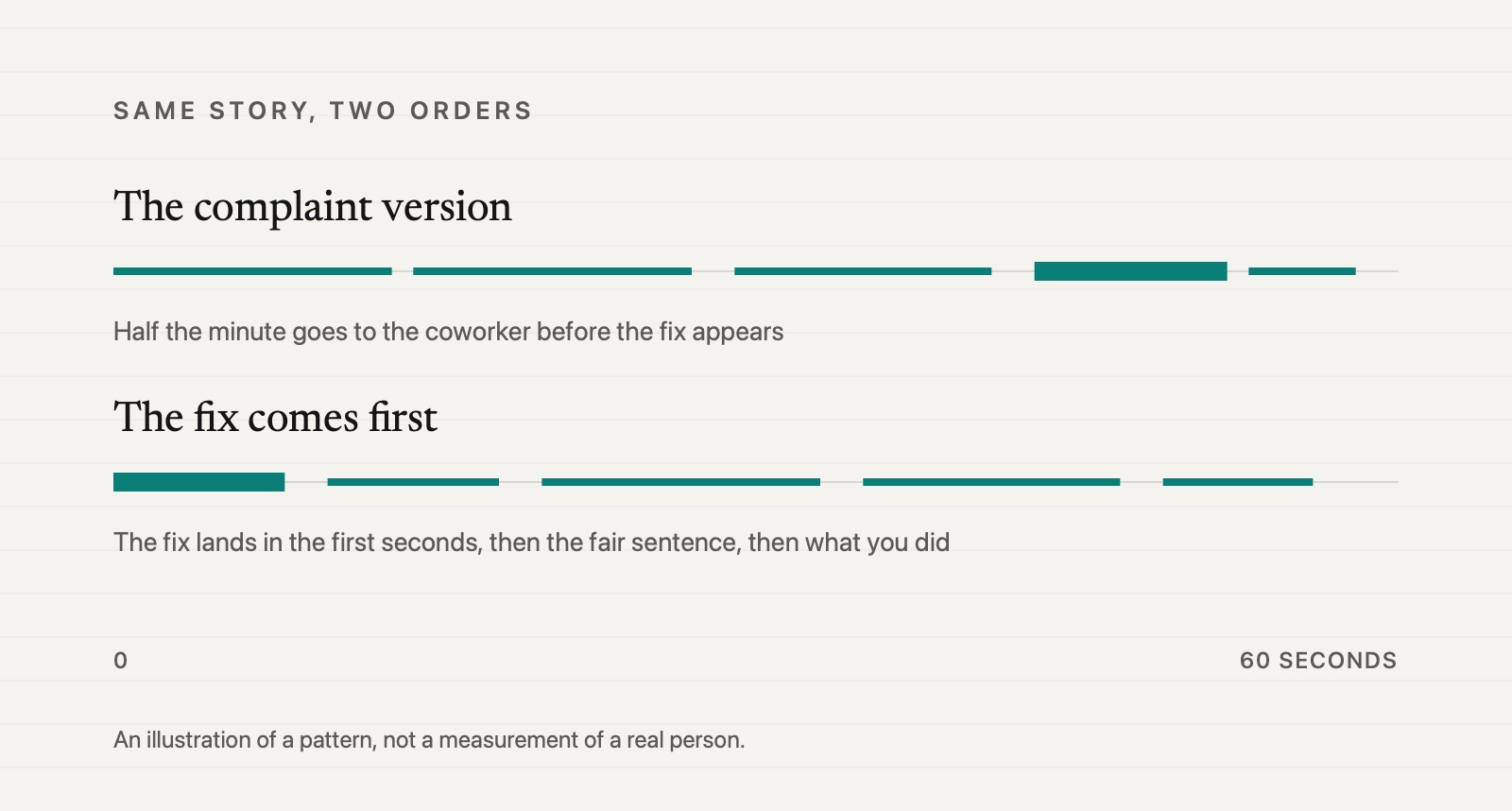
That order feels unnatural, because the story in your head starts with everything the coworker did wrong. Told that way, the answer becomes a complaint with a short fix at the end. This post shows how to turn it around, builds one example answer, and ends with a five-minute exercise you can do today.
What "tell me about a time you worked with a difficult coworker" is really asking
The question comes in several forms: "tell me about a time you worked with a difficult coworker," "describe a conflict with a team member," or "how do you handle a colleague who is hard to work with." Career centers group these as behavior-based questions, the kind that start with "tell me about a time when," and the University of Washington's career guide suggests that what you did should take up about 60 percent of the answer (University of Washington Career & Internship Center).
Interviewers ask because almost every team has a hard working relationship now and then. Writing for Harvard Business Review, Amy Gallo points out that working with someone you cannot stand is distracting and draining, and that with the right tactics you can still have a productive working relationship with them (Harvard Business Review, How to Work with Someone You Hate). The interviewer wants to know whether you are the person who finds those tactics or the person who gets drained.
So the question is really three smaller ones. Can you describe someone difficult without being unfair to them? What did you actually do? And did the work get better because of it?
Why the answer turns into a complaint
Most people tell this story in the order they lived it. The coworker did this. Then they did that. Then it got worse. Then, finally, something you tried helped.
There is a reason the first half comes out that way. The Ethics Unwrapped program at the University of Texas at Austin describes the fundamental attribution error: when someone else does something that affects us, we tend to blame their character and skip the circumstances, while when we do the same thing we point to the situation, like running late (Ethics Unwrapped, University of Texas at Austin). In an interview, that bias shows up as thirty seconds about what the coworker was like before you ever say what you did.
Out loud, that costs you twice. The interviewer hears a complaint first and has to wait to find out whether you are going anywhere with it. And the part they care about, your move, gets whatever time is left.
How to answer tell me about a time you worked with a difficult coworker in four parts
Here is the shape. It fits inside the STAR method. It only changes what you say first.
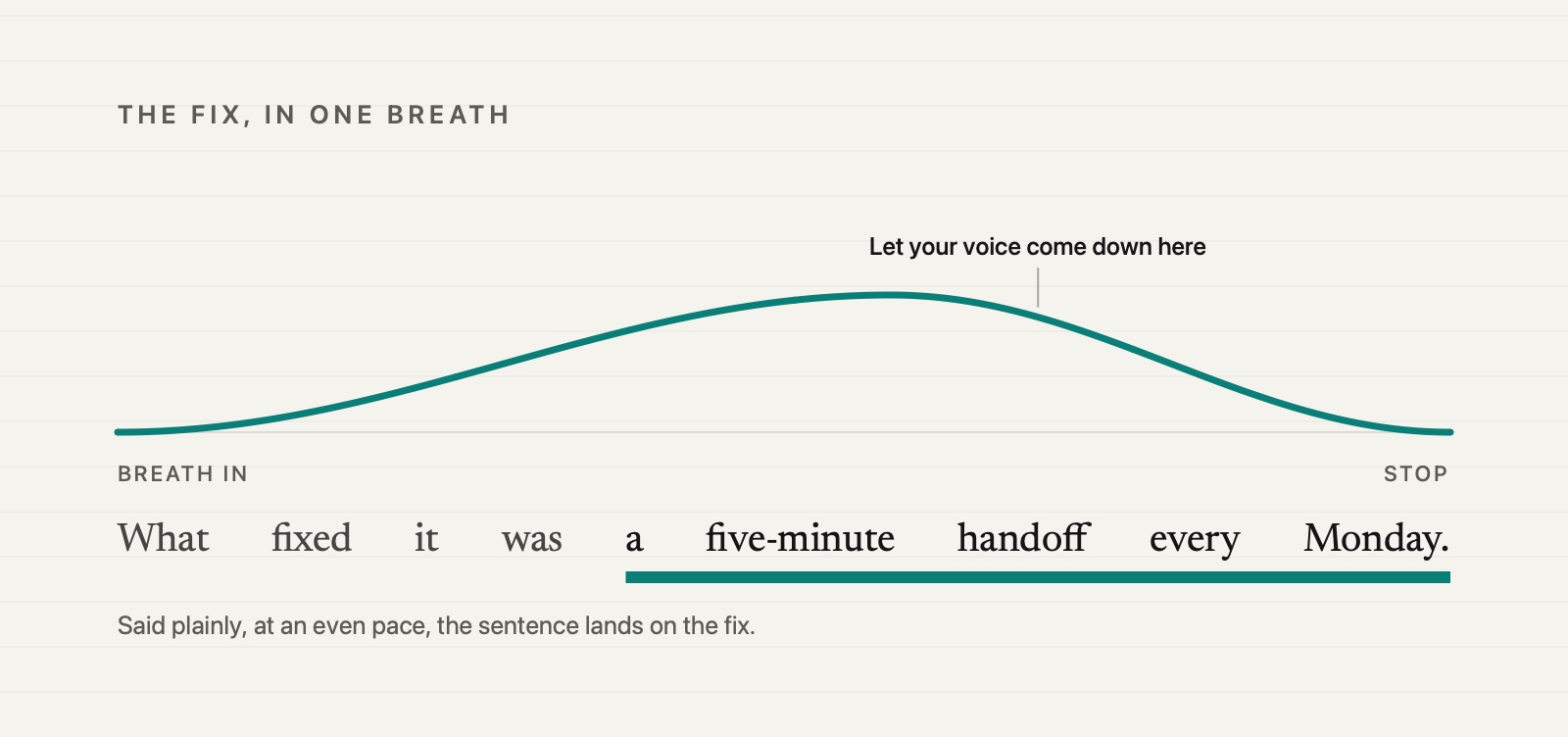
Part one, what fixed it, in your first sentence. Say what the coworker did that made the work hard, and what changed it. "I worked with a planner who kept changing our shared forecast without telling anyone, and what fixed it was a five-minute handoff every Monday."
Part two, the coworker, fairly, in one sentence. Give the reason behind their behavior the way they would give it.
Part three, what you did, in three or four sentences. This is most of the answer. What you asked, what you learned, what you proposed, and what you changed on your own side.
Part four, how the working relationship changed, in one or two sentences. What was different afterward, and one thing you would do the same way again. Then stop.
Here is a made-up example for the rest of this post. Marcus is an operations analyst at a regional distributor, interviewing for a senior analyst role. Asked to tell me about a time you worked with a difficult coworker, he says:
"I worked with a planner who kept changing our shared forecast without telling anyone, and what fixed it was a five-minute handoff every Monday. My Tuesday report pulled from his sheet, and twice in one month my numbers were wrong because he had updated it overnight. He was getting late changes from the sales team and was trying to keep the sheet current, and he did not know my report depended on it. So instead of raising it with our manager, I asked him for ten minutes and showed him what my report did. He had no idea. We agreed on a Monday afternoon handoff where he told me what had changed, and I added a note on the sheet showing when it was last updated. The errors stopped, and we kept the handoff for the rest of the year. What I would do again is ask what was going on before assuming he did not care."
About a minute. The fix is in the first sentence, so the interviewer knows where the story is going. The planner gets one fair sentence. Most of the time goes to what Marcus did, and the last line is about the relationship, not about being right.
Describe the coworker fairly, in one sentence
Part two is where most answers go wrong, and it is the part interviewers listen to most closely. If the coworker sounds like a villain, the story becomes about them, and it suggests you might describe your next team the same way.
Labels are the giveaway. "He was careless" and "she was impossible to work with" describe a person. "He was getting late changes from sales and trying to keep the sheet current" describes a situation. The second kind is fair, and it is also easier to believe, because almost nobody at work is difficult for no reason.
A fair sentence also sets up part three. Once Marcus understood that the planner did not know about the Tuesday report, the fix was obvious. The interviewer hears that you looked for the reason, which is the skill the question is testing.
Pick a story where the working relationship changed
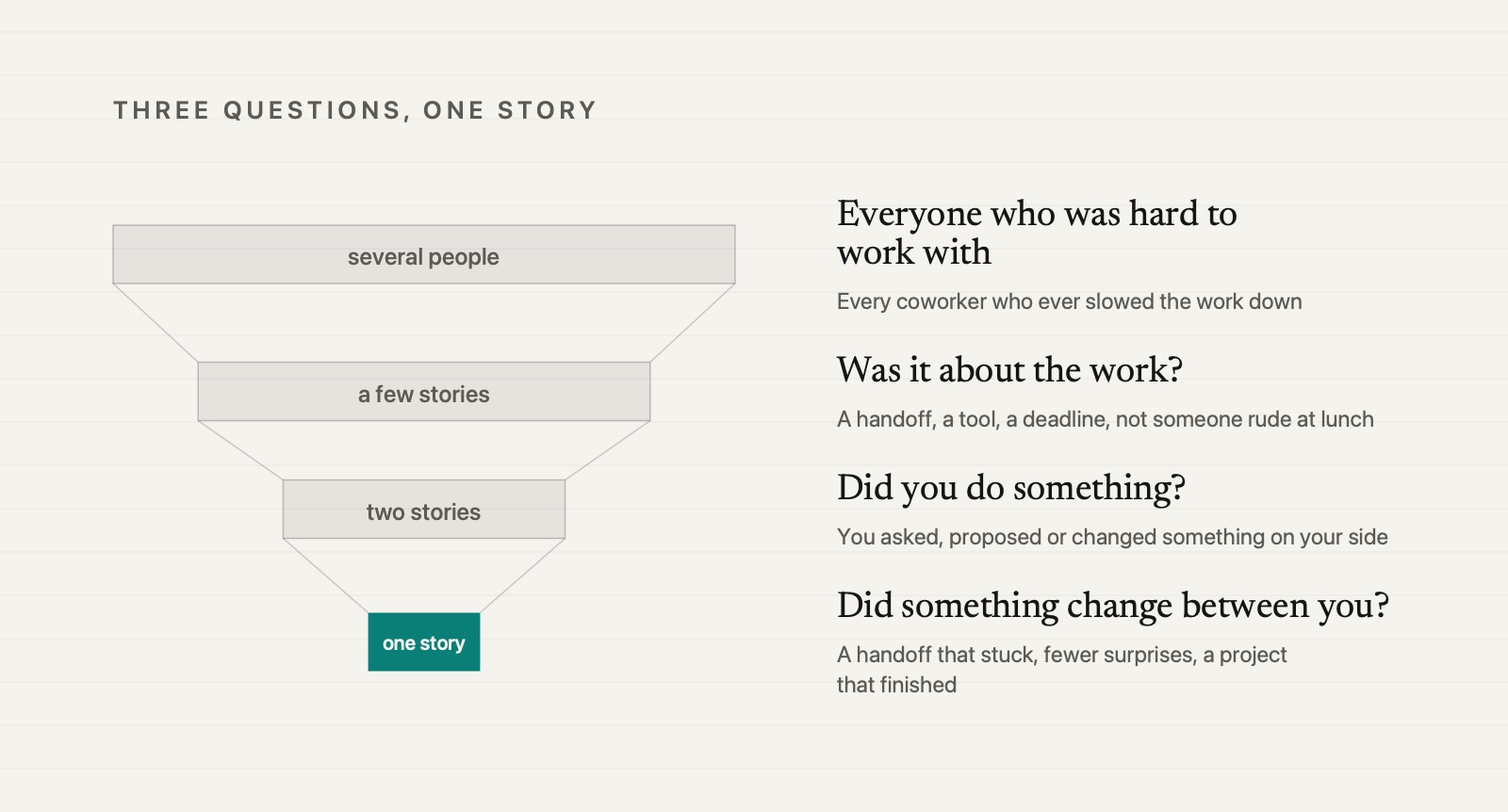
You probably have more than one difficult coworker story. Narrow them with three questions.
Was it about the work? A missed handoff, a shared tool, a process, a deadline, a different idea of what "done" means. Not someone who was rude at lunch.
Did you do something? The strongest stories have a move in them: you asked, you proposed, you changed something on your side. "I waited for them to leave" is not an answer.
Did something change between you? Not friendship, necessarily. A handoff that stuck, fewer surprises, a project that finished. If nothing changed, the story shows patience, which is less than the question asks for.
Two things to keep separate. If your story is about an outside person, a client or a customer, that is a different question with its own shape, and our post on answering the difficult customer question covers it. If your story is about pushing back on a decision your manager made, see our post on the disagreed-with-your-manager question. A difficult coworker story is about a peer, and a working relationship that lasted longer than one conversation.
If you are early in your career, a group project partner, a shift mate or a club officer all count. What matters is that you had to keep working with the person.
Say the first sentence plainly
Out loud, the first sentence is the one people soften. "I guess there was this one guy who was kind of hard to work with sometimes." Every softening word delays the point and makes you sound unsure of your own story.
Say it at an even pace and let your voice come down at the end, on the fix. If the whole sentence is too long for one breath, split it in two: what made the work hard, then what fixed it. Then take a short breath before part two. That pause tells the listener the headline is done and the story is starting.
Keep an eye on part three, too. Every conversation you had with the coworker feels important, so this part grows. Keep the moves that changed the outcome and drop the rest. About a minute is enough for a story like this.
When the interviewer pushes
Follow-ups are common with this question. The same shape handles them.
"What if the handoff had not worked?" Say the next step in one or two sentences. "I would have asked our manager to sit in on one handoff so we could agree on a rule for the sheet."
"Tell me about a coworker you could not get along with." Use the same four parts. The first sentence names what did not work, and part four says what you learned about how you work with people.
"What would you do differently?" Pick one thing, and make it about you. "I would have asked him what was going on after the first wrong report, not the second."
Try it now: practice in five minutes
You need your phone's voice recorder and a timer.
- Pick one story about a coworker where something changed because of what you did. Write down what fixed it, in five words or fewer.
- Write your first sentence: "I worked with [who] who [what made it hard], and what fixed it was [those five words]." Then write one fair sentence about why they did it.
- Start the recorder and the timer. Ask yourself out loud, "Tell me about a time you worked with a difficult coworker." Answer from your notes, and stop near one minute.
- Play it back and listen for two things only. Did the fix arrive in your first sentence? Did the coworker sound like a person with a reason, or like a problem?
- Fix one of those and record it again. If you have time left, answer "What would you do differently?" in two sentences.
On the second take, listen for whether the fix moved closer to the front.
If the story still comes out as a complaint the moment someone asks, even with clear notes, that is a practice problem, and practice is how it gets easier. Sayforth is a 30-day iPhone program built for that kind of practice: one question a day, answered out loud, and after you finish, your answer drawn as one line, so you can see whether your main point came early or late, with one change to try tomorrow. It is coming soon, and you can read how the daily practice works now.
Be first to know when Sayforth is live.
Get launch updatesFrequently Asked Questions
How do you answer "tell me about a time you worked with a difficult coworker"?
Say what the coworker did that made the work hard and what fixed it, in your first sentence. Describe them fairly in one sentence, spend most of the answer on what you did, and end with how the working relationship changed. Keep it to about a minute.
What is a good example of a difficult coworker for an interview?
Someone whose way of working made your shared work harder: missed handoffs, changes made without notice, a different idea of what finished means. Pick a story where you did something and where something changed afterward.
Should I say I have never had a difficult coworker?
No. It sounds like you avoid conflict or have not noticed it. Everyone has worked with someone who was hard to work with at some point, and the interviewer is asking what you did about it.
Should I use the STAR method for this question?
Yes. The four parts above fit inside situation, task, action and result. The one change is the order: say what fixed it first, so the interviewer knows where the story is going before you explain the situation.