
Here is how to explain a gap in your resume in an interview. Say the reason in one plain sentence. Say what is true now in a second sentence. Then stop. Said out loud, the whole answer takes about ten seconds, and the interviewer moves on. The trouble starts when the answer runs past those two sentences, because almost everything that comes after them sounds like an apology.
This post is about the spoken answer: the two sentences, what the long version sounds like, how the first sentence changes with the kind of gap, and what to do about a follow-up. It ends with a five-minute exercise. If the gap comes up while you are walking through your whole work history, our post on how to answer "walk me through your resume" covers where it fits in the order.
What the interviewer is really asking
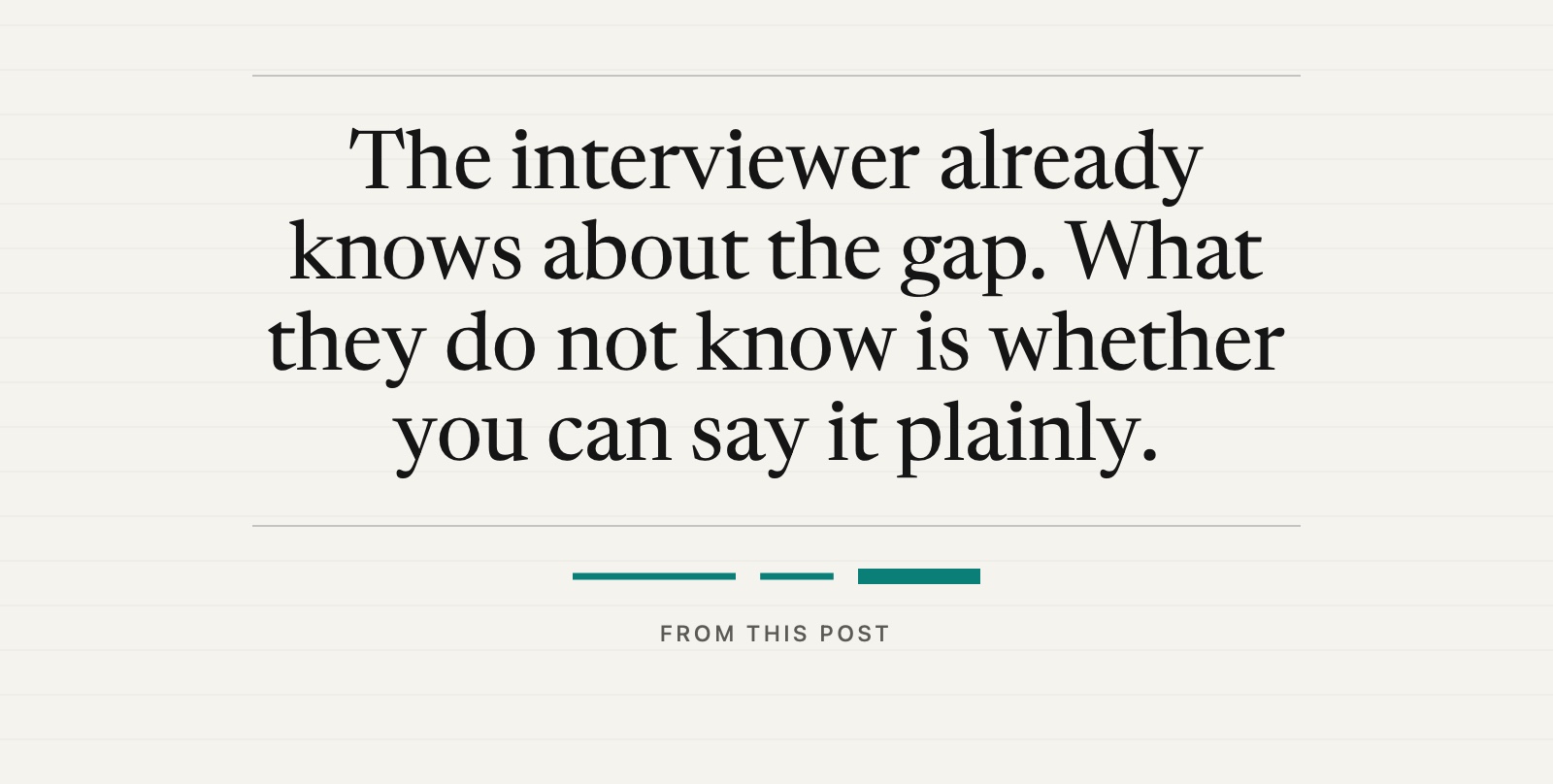
The interviewer can see the gap. The dates are on the page, and they usually noticed before you walk in. So the real question is not "is there a gap?" It is two quieter ones: does this gap mean a problem I should know about, and can this person talk about it plainly?
That second question matters more than most people think, because the written explanation has already had its chance. A field experiment sent more than 9,000 resumes to employers in eight sectors in the United Kingdom. Its starting point: people are still less likely to be hired when a gap is visible. A redesigned resume that listed years in each job instead of dates got about 15 percent more callbacks than a traditional resume with a gap, and that held whether or not the gap was explained on the page (Harvard Kennedy School, summarizing a study in Nature Human Behaviour). The interview is where a reason can finally land.
In a LinkedIn survey of hiring managers, 51 percent said they are more likely to contact a candidate who gives context about a career break, and 52 percent said candidates should bring the break up themselves during the interview (LinkedIn). Context, in both cases, means a reason. It does not mean a defense.
How to explain a gap in your resume in an interview in two sentences
The answer has two parts, and each is one sentence.
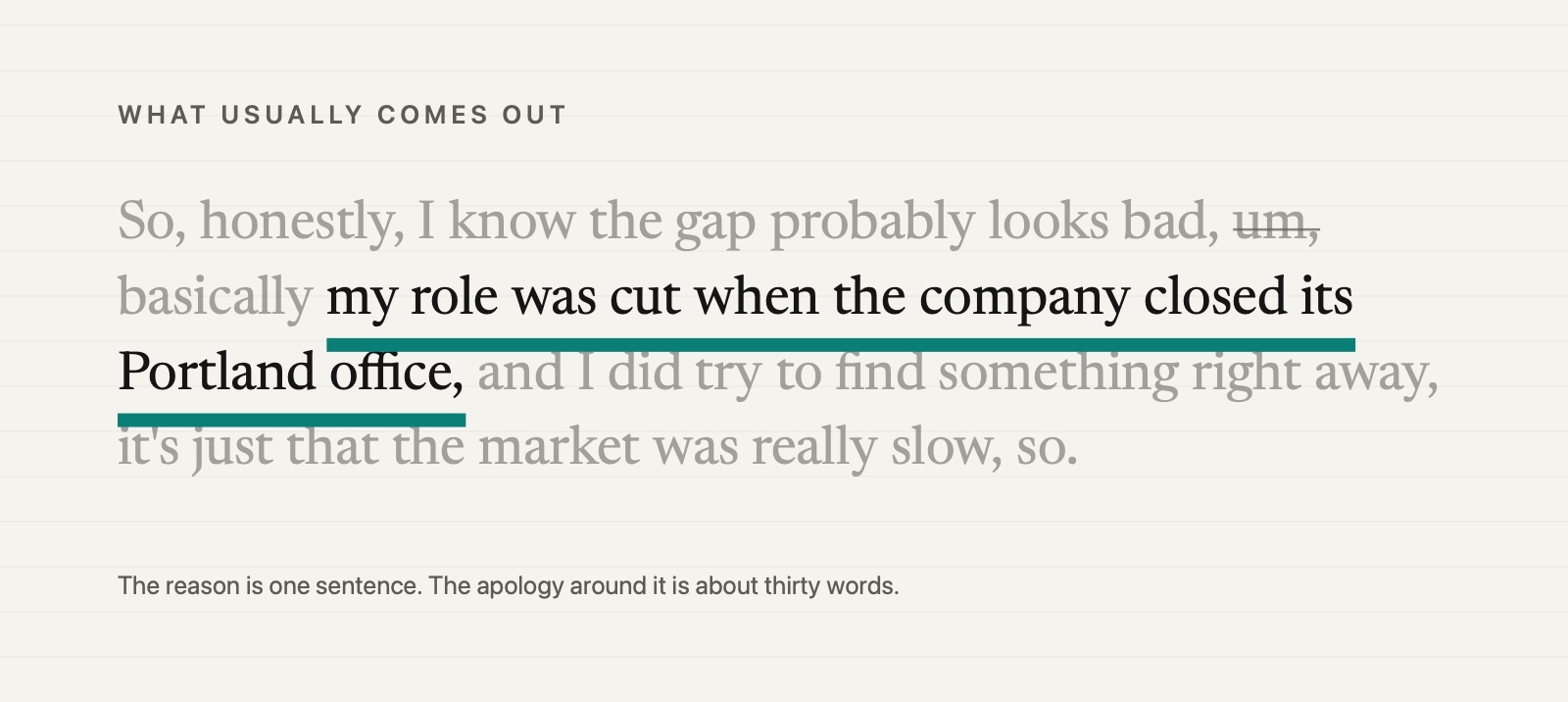
Sentence one is the reason. Plain words, no preface, no softening. Not "so, honestly, the thing is," just the fact. "My role was cut when the company closed its Portland office." "I took a year out to care for my mother." "I left to finish a nursing degree."
Sentence two is what is true now. What you did with the time if it is relevant, and that you are ready. "I spent the nine months since finishing a bookkeeping certificate, and I'm ready to go." If you did nothing you would put on a resume, the second sentence is shorter: "That's settled now, and I'm ready to go."
Here is the example for the rest of this post. Maya is interviewing for a bookkeeping role. Her resume shows nine months between her last office job and today. Asked about it, her whole answer is:
"My role was cut when the company closed its Portland office. I spent the nine months since finishing a bookkeeping certificate, and I'm ready to go."
Two sentences, about ten seconds, then silence. The silence is the hard part of how to explain a gap in your resume in an interview, and it is also the part that does the work. A short rest after a plain answer reads as calm. Indeed's career guide makes the same two points from the hiring side: be honest, and keep the explanation short, then steer back to your skills and qualifications (Indeed).
Compare that with what most people actually say. The reason is in there, buried under everything said to make it sound acceptable.
What over-explaining sounds like
Over-explaining has a shape, and once you know it you will hear it in your own recordings. Most advice on how to explain a gap in your resume in an interview says "keep it brief" and stops there. Brief is the result. These four habits are what get in the way.
The preface comes first: "I know this probably looks bad," or "so this is a bit of a story." It tells the interviewer how to feel before they have heard the reason, and the feeling is worry.
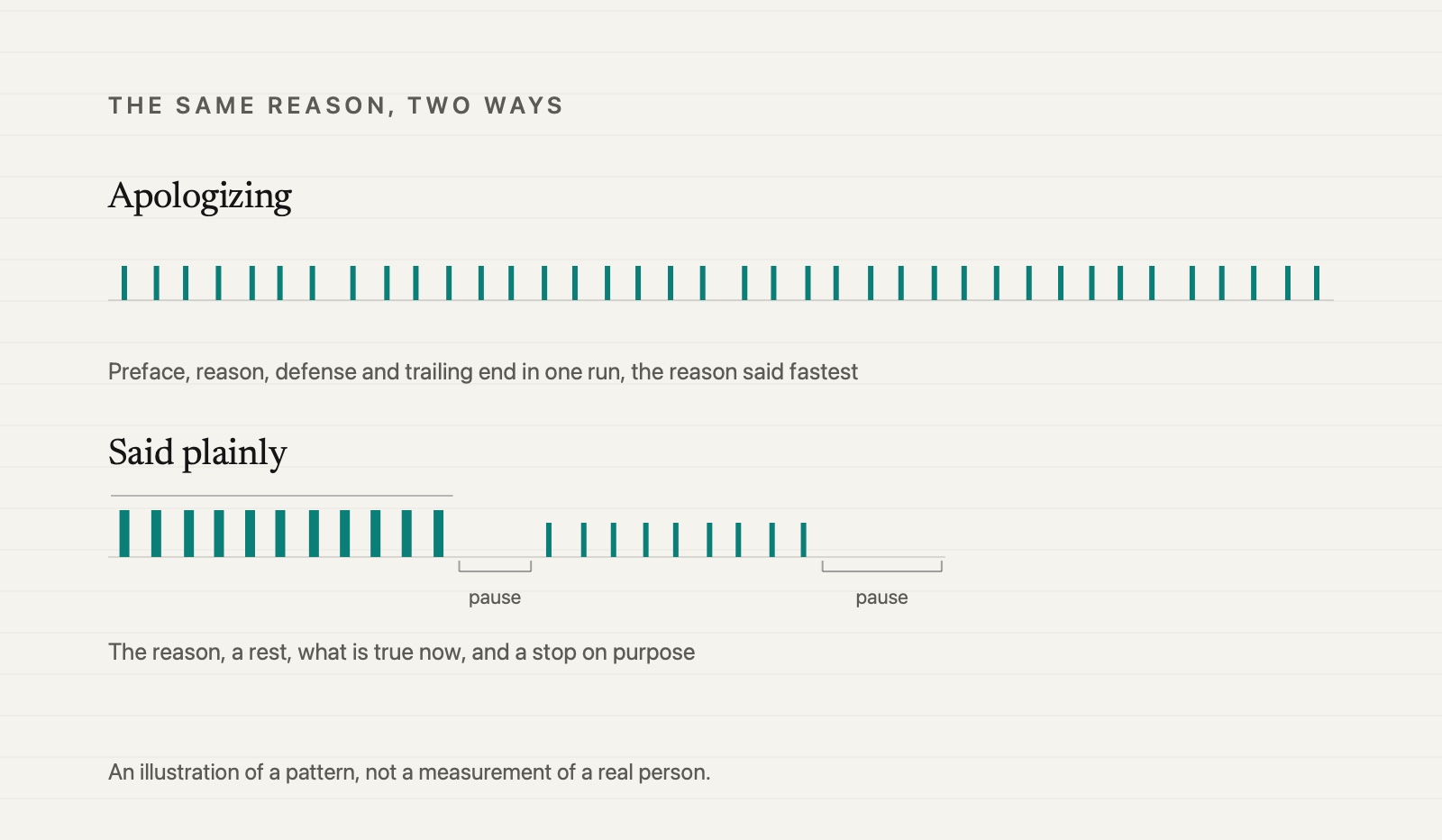
Then the reason, often spoken faster than the sentences around it. People speed up on the part they are nervous about, with no breath between the words, which is the pattern our post on how to stop talking too fast describes: the pauses close up first.
Then the defense: "and I did try to find something right away, it's just that the market was really slow." Nobody asked whether you tried. Answering a question nobody asked is what makes an answer sound like an apology.
Then the trailing end: "so, yeah," or "so that's basically it." The voice drops, the sentence never finishes, and the interviewer has to decide whether to rescue you.
The plain version has none of those: the reason, a breath, the sentence about now, a breath, then a stop on purpose.
Match the first sentence to the kind of gap
Only the first sentence changes with the reason. Here is the plain version for the gaps interviewers see most often.
- A layoff. Name the event, not the feeling. "My role was eliminated when the company merged two teams." A plain sentence already says it was not your fault.
- Caring for someone. "I took eighteen months out to care for my father." That is enough. If you want to add one clause, make it about readiness: "and that's settled now."
- Your own health. "I took time off to deal with a health issue, and it's resolved." No diagnosis, no detail. Indeed's guide notes that you do not have to offer personal information, and a sentence like this closes the subject politely.
- A job that did not work out. "That role wasn't the right fit, and we parted ways." One plain sentence, no story, no blame. The FAQ below covers what to do if you were let go.
- Time off by choice. Say it as a choice. "I took six months off to travel after eight years without a break." Hesitating is what makes a choice sound like a cover story.
- School. "I went back to finish a degree in accounting." The degree is on the resume, so keep it short.
- A long search. "I was looking for the right role, and I was careful about it." Then what you did with the time, if anything is worth saying.
Write your own first sentence before the interview, word for word. Then say it out loud a few times until it comes out at the same speed as the sentences around it.
When the interviewer asks a follow-up
Sometimes the two sentences are the whole conversation. Sometimes there is one more question: "What did you do during that time?" or "Was the time off planned?" Treat it as a normal question, not a sign the first answer failed.
The rule is the same. One more true sentence, then stop. For Maya: "Mostly the certificate, and a good number of interviews that weren't the right fit." If the follow-up reaches a part you would rather keep private, say that plainly and close it: "That part is personal, but it's resolved, and it won't affect my availability." Interviewers hear that sentence often, and they move on.
What you do not do is volunteer a third sentence out of nerves, or a fourth to fill the quiet after the third. The silence after your answer belongs to the interviewer, and the clean stop is what gives them the turn. Our post on how to sound confident in an interview explains why the stop reads as confidence.
Try it now: practice how to explain a gap in your resume in an interview in five minutes
You can do this with your phone's voice recorder and a timer.
- Write your two sentences. The reason, then what is true now. Cut every word whose only job is to explain why the gap is okay: "honestly," "basically," "I know it looks bad."
- Start the timer and the recorder. Say out loud, as if someone asked, "I noticed a gap between your last two roles. What happened?" Answer with your two sentences. Then count silently to three before you stop the recording.
- Play it back and listen for three things only. Did a preface sneak in before the reason? Did the words speed up on the reason? Did a third sentence arrive after the second one?
- Pick one of the three and change it. Record the answer again.
- If you have a minute left, record the follow-up too. Ask yourself "What did you do during that time?" and answer with one sentence, then stop.
The second take is almost always shorter, and the reason comes out slower. For a longer routine built on the same idea, our post on how to practice for an interview alone has a five-round version.
If you can hear the apology on playback but it comes back the moment someone actually asks, that is a practice problem, not a knowledge problem, and a few minutes a day is what fixes it. Sayforth is a 30-day iPhone program built for exactly that: one short coached spoken answer a day, drawn as a single answer line after you finish so you can see where your point landed and where the softening words crept in, with one change to carry into tomorrow. It is coming soon, and you can see how the daily practice works now.
Be first to know when Sayforth is live.
Get launch updatesFrequently Asked Questions
Do I have to explain a gap in my resume in an interview?
If the interviewer asks, yes, and the answer should be short and honest. An invented reason is a real risk, and honesty is the first thing Indeed's guide asks for. You do not have to share personal detail, though. One plain sentence that names the reason and one that says it is resolved is a complete answer.
How long should my answer about an employment gap be?
About ten seconds: two sentences, said at a normal pace, followed by a stop. The reason comes first, then what is true now. If the interviewer wants more, they will ask, and the follow-up gets one more sentence.
Should I bring up a resume gap before the interviewer asks?
If the gap is visible on the page, yes. In a LinkedIn survey, just over half of hiring managers said candidates should raise a career break themselves. The best moment is when you reach that point in your work history, where one plain sentence covers it, so the interviewer never has to decide whether to ask.
How do I explain a gap if I was fired?
Say it in one plain sentence with no blame: "That role wasn't the right fit, and we parted ways." If you are asked what you learned, give one sentence about what you do differently now, and stop. A short, calm answer about being let go says more about you than any explanation of what went wrong.